
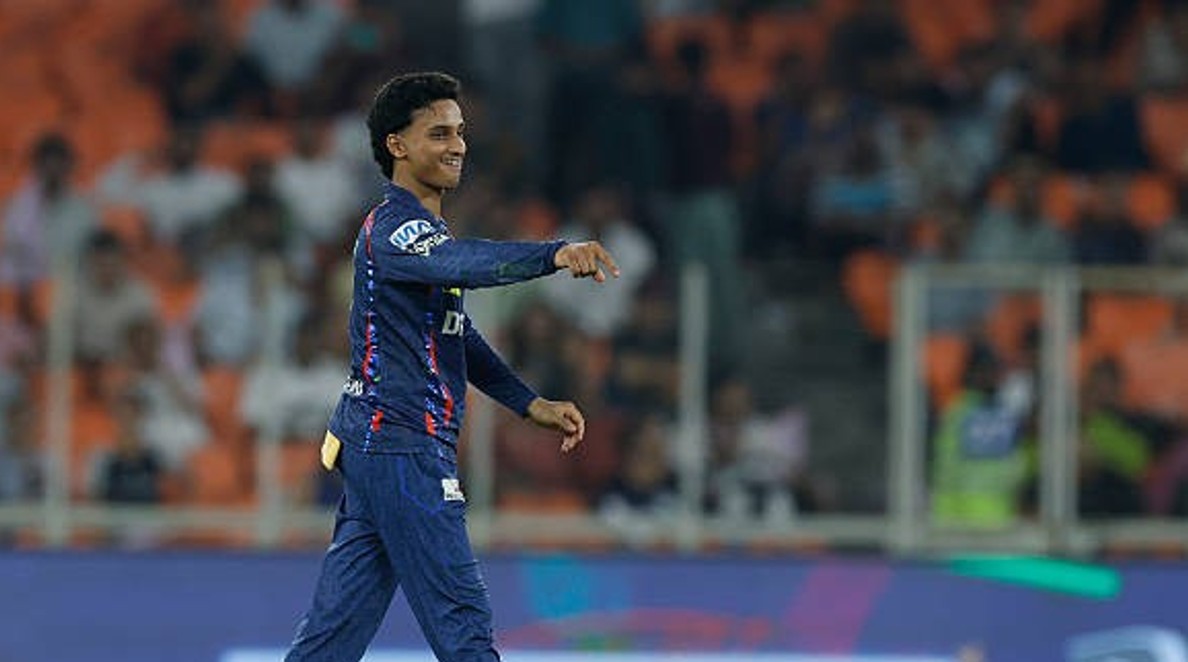
The Indian team has named Ayush Badoni as a late replacement for Washington Sundar in the ongoing ODI series against New Zealand after Sundar was ruled out with pain in his left lower rib. Sundar, who played in India’s four-wicket win in the first ODI, will undergo further scans, and the selectors have handed Badoni his first senior India call-up for the second and third ODIs. The second match is scheduled for Wednesday, January 14 in Rajkot.
Why Badoni is a smart pick for an immediate debut
Badoni’s elevation is more than a like-for-like swap on paper. At 26, he has built a reputation as a powerful lower-order batter in the IPL and has enough bowling experience to keep team balance intact. Here are three clear reasons India should consider handing him a debut straight away in Rajkot.
1. A natural fit at No.5/6 — a proven finisher
Badoni has been used mostly in the lower middle order in franchise cricket, and his numbers show he can accelerate the innings when it matters. In IPL games batting at No.5, he has scored 285 runs in 11 innings with a strike rate of 137.68 and two fifties. When used at No.6, he has 340 runs from 19 innings at a strike rate of 138.21, also with two half-centuries.
Those figures underline his ability to finish games and increase the scoring rate after the top order. If Shreyas Iyer (at four) gets out early, Badoni can provide stability and momentum rather than leaving the responsibility solely on KL Rahul or the top three.
2. Off-spin bowling keeps team balance intact
Critics might argue Badoni is primarily a batter, but he also bowls right-arm off-spin and has picked up wickets across formats. Recently he bowled consistently in domestic tournaments — the Vijay Hazare Trophy and the Syed Mushtaq Ali Trophy — returning useful returns (four wickets in three VHT games and six wickets in six SMAT innings).
His broader bowling record:
- 22 first-class wickets in 20 innings
- 18 List A wickets in 20 innings
- 17 T20 wickets
That means selecting Badoni won’t necessarily weaken India’s bowling options and allows the team to retain a similar balance of batting depth and off-spin coverage without Washington Sundar.
3. A chance to test a World Cup prospect ahead of 2027
With the 2027 ODI World Cup in mind, the next two ODIs against New Zealand are a low-risk environment to evaluate a potential long-term option. Badoni will face a competitive New Zealand bowling attack, but the pressure is manageable compared with high-stakes tournaments.
If he performs well with both bat and ball in these matches, he could emerge as a flexible back-end batter and part-time off-spinner India can groom across upcoming bilateral series — England, West Indies, New Zealand, and Sri Lanka — before the World Cup cycle intensifies.
What a debut could mean for India
Giving Badoni a shot in Rajkot would be a statement about India’s intent to deepen bench strength and experiment with finishing options. He brings aggressive batting, useful off-spin, and local experience of finishing roles — a combination that fits the modern ODI template. Whether he starts or comes in as a finisher, this series is a timely opportunity for him to stake a claim for future squads.
With Sundar’s fitness uncertain, Badoni’s selection adds a fresh dynamic to the side and gives the team flexibility at a time when bench resources matter more than ever.