
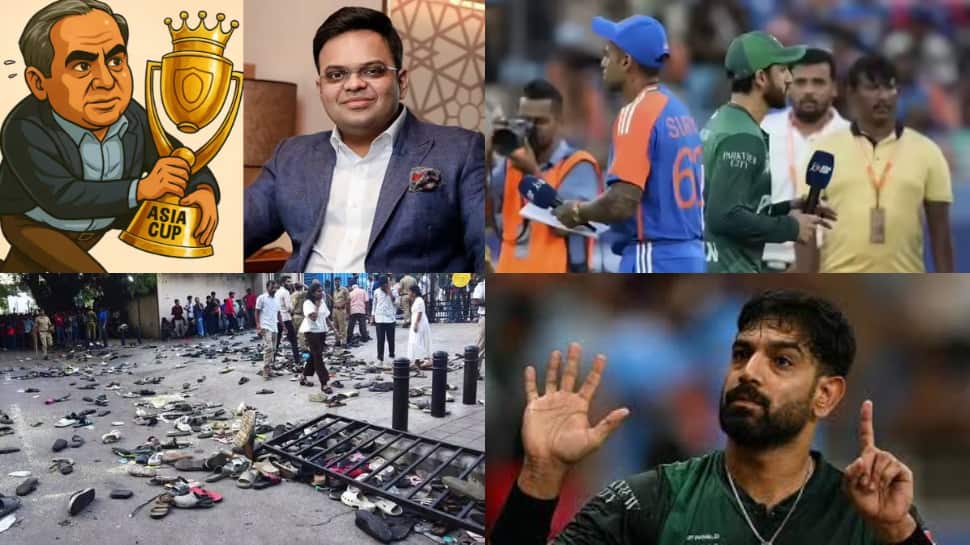
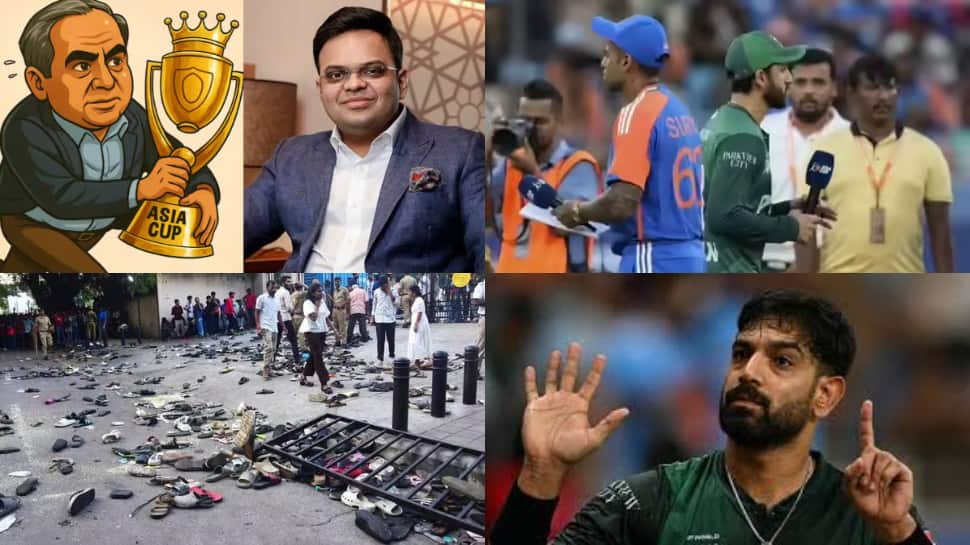
2025 will be remembered as a year when cricket’s highs met a run of difficult off-field moments. From a bizarre trophy theft to heated on-field gestures between traditional rivals, several incidents forced boards, broadcasters and fans to rethink policies that had been taken for granted. Here’s a clear look at the biggest controversies that shaped the sport this year and what they mean going forward.
Trophy Chor saga: When the silverware went missing
The phrase “Trophy Chor” became a global cricket meme after a tournament trophy briefly disappeared during celebrations. What began as light-hearted social media commentary quickly turned serious as questions arose about access control, event security and the management of ceremonial moments.
What happened
- During the post-match presentation, the trophy was taken off the dais without clear authorisation and circulated among a group of people before being returned.
- Video clips and conflicting eyewitness reports spread rapidly, prompting an immediate probe by the event organisers.
Consequences and lessons
Organisers faced scrutiny over lax access to the stage and inadequate credential checks. The episode sparked an industry-wide review of presentation protocols, including stricter credentialing, more controlled staging and a re-think of who is allowed on the pitch during celebrations. Broadcast partners also pledged tighter coordination to avoid replicating the chaos on live TV.
India-Pakistan handshake drama: Sport, diplomacy and expectations
Matches between India and Pakistan are more than cricket; they carry diplomatic weight. A highly publicised post-match handshake — or lack of one — in a high-stakes fixture triggered intense debate about sportsmanship, national pressure on players and the role of team management during high-profile encounters.
Why it mattered
- Expectations for symbolic gestures are high in India-Pakistan meetings. When a handshake moment did not go as many hoped, social and political commentary followed within hours.
- Both boards and player unions were asked to clarify codes of conduct and to provide players with better support for managing off-field scrutiny.
Takeaway
The episode highlighted the need to separate sport from external pressure and to prepare players for the extra scrutiny that comes with marquee rivalry games. Many pundits urged clearer guidance from boards about post-match interactions and stronger media training for players.
RCB stampede: Crowd safety under the microscope
Royal Challengers Bangalore’s home fixture was marred by a crowd-control incident that left several spectators injured. The images of frightened fans and bottlenecks near exits prompted immediate calls for an overhaul in stadium safety measures.
Immediate fallout
- Local authorities launched an inquiry into entry and exit management, vendor placement and emergency response times.
- RCB and the stadium operators pledged to tighten turnstile procedures, increase stewards and improve signage to prevent repeat incidents.
Long-term implications
With packed venues returning to cricket, the episode served as a reminder that thrilling atmospheres must be matched by robust safety planning. Fans, especially families, expect secure environments; organisers will need to prove they can deliver that consistently.
DRS errors: When technology fails the game
Several high-profile Decision Review System (DRS) mistakes dominated headlines when umpiring calls overturned in controversial fashion. From poor ball-tracking visuals to audio glitches during third-umpire reviews, the incidents reignited debates about the limits of technology in cricket.
Core problems reported
- Ball-tracking anomalies in low-light conditions and inconsistent frame rates across broadcast feeds.
- Communication breakdowns between on-field umpires and third-umpire teams at crucial moments.
What governing bodies are doing
Cricket boards and the ICC announced audits of DRS suppliers and proposed clearer minimum broadcast standards for matches using technology. Analysts also recommended better contingency plans when technology performs poorly, such as defined protocols for reverting to on-field umpire calls.
Doping cases: Integrity tests the sport
Several doping-related cases surfaced during the year, with players from different levels facing provisional suspensions and lengthy reviews by anti-doping agencies. The issues ranged from inadvertent contamination to alleged deliberate breaches of the code.
Impact on players and teams
- Some players received bans or provisional suspensions, disrupting team plans and raising questions about education and testing procedures.
- Smaller cricketing nations called for more accessible education programmes and clearer laboratory communications to avoid accidental violations.
Moving forward
Boards and anti-doping bodies have committed to stepped-up education for players, more transparent testing processes and quicker resolution timelines. The aim is to protect clean athletes while ensuring genuine mistakes are dealt with fairly.
What these controversies mean for cricket
Collectively, these incidents exposed vulnerabilities in event management, technology reliance and integrity systems. The positive side is that each controversy prompted immediate self-reflection across the sport.
- Organisers are tightening security and presentation protocols to keep celebrations safe and dignified.
- Teams and federations are investing more in player support, especially for high-pressure fixtures between intense rivals.
- Technology vendors face higher standards and accountability, while anti-doping authorities are prioritising education and faster adjudication.
Cricket’s popularity keeps rising, and with it comes greater scrutiny. The controversies of 2025 will likely accelerate reforms that make the game safer, fairer and more resilient — provided administrators keep up the momentum and listen to players and fans alike.