
India’s cricket story is written not just by players but by the grounds that hosted their feats. The country’s oldest stadiums are living museums — places where colonial-era origins meet modern drama, and where crowd noise can lift a team to the extraordinary. Below are five of the oldest, most storied cricket venues in India and the moments that make them unforgettable.
Eden Gardens — Kolkata (Founded 1864)
Often called the heart of Indian cricket, Eden Gardens is the nation’s oldest stadium and one of the world’s most iconic arenas. With a capacity that once neared 100,000 and now sits around 68,000, its atmosphere is instantly recognisable to anyone who has watched Indian cricket grow.
- Historic matches: Hosted the 1987 World Cup final — the first time the final was staged outside England.
- Memorable performances: VVS Laxman’s epic 281 in 2001 helped engineer one of India’s most famous Test comebacks against Australia.
- Modern role: Home ground for Bengal’s state side and the Kolkata Knight Riders in the IPL, continuing to shape cricketing folklore.
Bombay Gymkhana Ground — Mumbai (Founded 1875)
Set in South Mumbai, Bombay Gymkhana is one of India’s oldest active sporting venues and a symbol of the game’s early days on Indian soil. Though smaller and more intimate than modern stadiums, its historical weight is considerable.
- Milestone event: Hosted India’s first Test in December 1933, when Lala Amarnath hit the country’s maiden Test century.
- Unique facts: That 1933 Test was also the first to be played on a Sunday and marked a temporary opening of the Gymkhana’s traditionally exclusive membership rules.
- Beyond cricket: A multi-sport hub and protected heritage site, the ground has supported rugby, football and more, and even hosted the first international Test for differently-abled players in 2002.
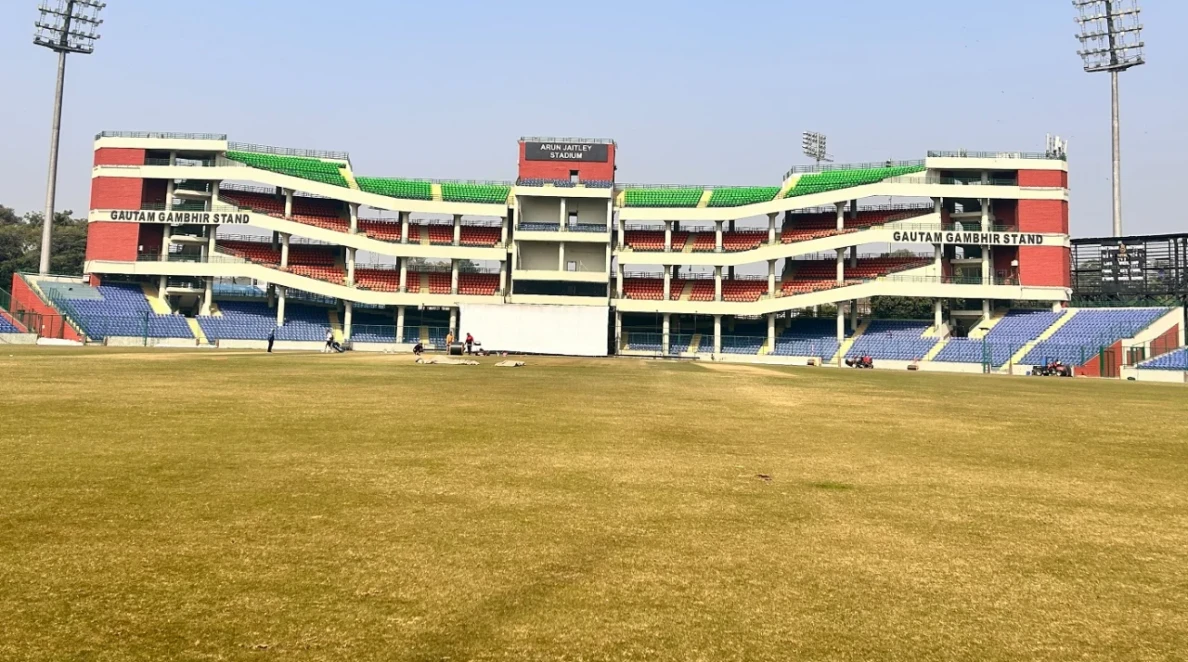
Arun Jaitley Stadium (Feroz Shah Kotla) — New Delhi (Established 1883)
One of the oldest international venues still regularly used in India, the ground long known as Feroz Shah Kotla was rechristened Arun Jaitley Stadium in 2019. It has been central to many post-independence chapters of Indian cricket.
- Post-independence milestone: Hosted India’s first Test after 1947, against the West Indies in 1948.
- Record moments: Anil Kumble’s rare 10-wicket haul in an innings (1999) and Sachin Tendulkar surpassing Sunil Gavaskar’s Test century tally (2005) are etched into the ground’s memory.
- Reputation: Known for being a tough place for visiting teams, the venue was long regarded as a home Test fortress and remains the base for Delhi’s Ranji side and the Delhi Capitals IPL team.
M. A. Chidambaram Stadium (Chepauk) — Chennai (Established 1916)
Chepauk is one of the oldest continuously used cricket grounds in India and a place where tradition and fervent local support meet high-quality cricket.
- Historic firsts: India claimed its first-ever Test victory here in 1952.
- Landmark matches: Hosted the inaugural Ranji Trophy match in 1934 and was the venue for only the second tied Test in history, during the 1986 India–Australia clash.
- Iconic innings: The stadium witnessed Sehwag’s explosive triple century in 2008 and Karun Nair’s triple hundred in 2016, among other notable performances.
- Crowd culture: Known for knowledgeable and respectful fans — a quality showcased when Pakistan’s Saeed Anwar received a standing ovation for his 194 in 1997.
Vidarbha Cricket Association Ground (Old) — Nagpur (Established 1929)
The Civil Lines ground in Nagpur served as the city’s principal international stadium for decades and played a key role in expanding cricket’s footprint in central India.
- Innovative step: In 1951 it became the first venue in Central India to lay turf wickets, a major development given the region’s extreme climate.
- World Cup history: Chetan Sharma took the first-ever Cricket World Cup hat-trick at this venue during the 1987 tournament, and Sunil Gavaskar scored his lone ODI century here the same year.
- International record: The ground staged nine Tests and 14 ODIs, including a memorable 2004 Test where Australia secured a rare series win in India.
- Current use: Though international focus moved to a newer stadium in 2008, the old ground still supports domestic cricket and regional development programs.
Why these grounds still matter
Old stadiums are more than brick and turf — they are the backdrop to cricket’s evolving story in India. From colonial beginnings to packed modern-day fixtures, these venues have hosted firsts, records and unforgettable drama. Many remain active, preserving history while continuing to nurture new talent and memorable moments.