
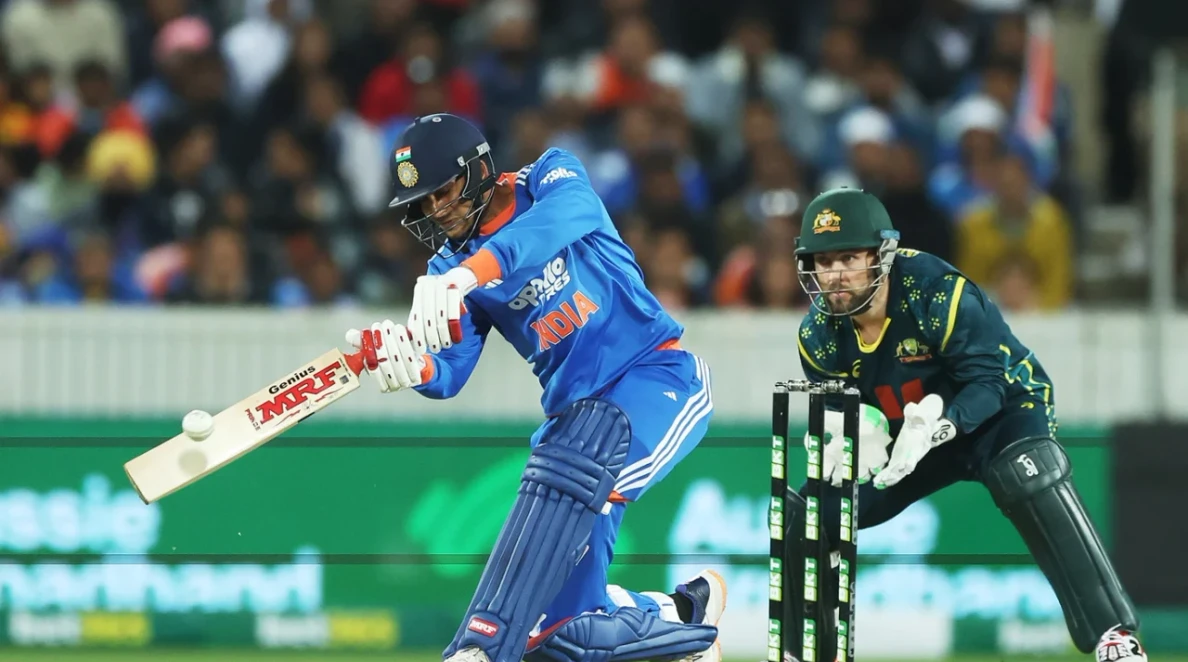
Ricky Ponting admitted he was surprised to see Shubman Gill missing from India’s T20 World Cup squad, a decision that has drawn plenty of attention. Ponting praised Gill’s recent Test form but said the omission highlights just how deep India’s batting resources have become.
Ponting’s reaction: surprise, then praise
“I could not believe that. I mean, I know his recent form has not been great in white-ball cricket. The last time that I really saw much of him play was the Test series against England in the UK, where he batted as well as I have ever seen anybody bat,” Ponting said on the ICC Review.
“I think, one, I am surprised, but two, it just shows the depth of Indian cricket. If you can think that someone as good as Shubman Gill does not get picked in a World Cup squad, then it goes to show how many good players they do have.”
Why the selectors left Gill out
The selection committee, led by Ajit Agarkar, opted to leave the Test and ODI captain out of the T20 squad mainly because of inconsistent scoring and a lagging strike rate in the shortest format. Gill had been named vice-captain for the Asia Cup 2025, but he never quite found form in that role, failing to score a fifty in 15 matches with a top score of just 47.
Across the last year in T20 internationals, Gill managed 291 runs in 15 matches — numbers that, combined with a subdued strike rate, worked against him when selectors weighed T20-specific requirements.
Series struggles and unlucky timing
- In the recent South Africa T20 series, Gill’s early scores of 4, 0 and 28 put him under pressure.
- The fourth game in Lucknow was abandoned because of heavy fog and poor visibility, depriving him of another chance to respond.
- A toe injury sustained during training forced Gill to miss the fifth T20I in Ahmedabad, leaving the series to end on an unfortunate note for the opener.
Public reaction and the Samson debate
Fans on social media were vocal after the squad announcement. Many criticised Gill’s exclusion but were even more upset that Sanju Samson, who enjoyed a stellar 2024 with three T20I centuries, was overlooked for a starting role. The debate underlined a growing split: should selectors prioritise players with consistent multi-format records, or give preference to specialists who deliver explosive T20 performances?
From Test dominance to T20 disappointment
Expectations were high for Gill in T20s after his extraordinary run in Tests — notably the 754 runs in the Anderson-Tendulkar Trophy against England. That prolific Test form raised hopes he could carry momentum into white-ball cricket, but he has not been able to replicate the same level of impact in T20s so far.
What this decision means
The choice to omit Gill is a reminder of India’s batting depth. When a player of his calibre misses out, it signals both the intense competition for places and how format-specific metrics like strike rate and recent T20 returns carry weight in selection discussions.
Looking ahead
Gill remains a top prospect for India across formats. Turning this setback into motivation will be key: sharper T20 strike-rate numbers and a string of strong performances in domestic and franchise cricket would make a compelling case for his return to the shortest format. For now, selectors have made a clear, if surprising, call — and the conversation around multi-format stars versus T20 specialists is likely to continue.