
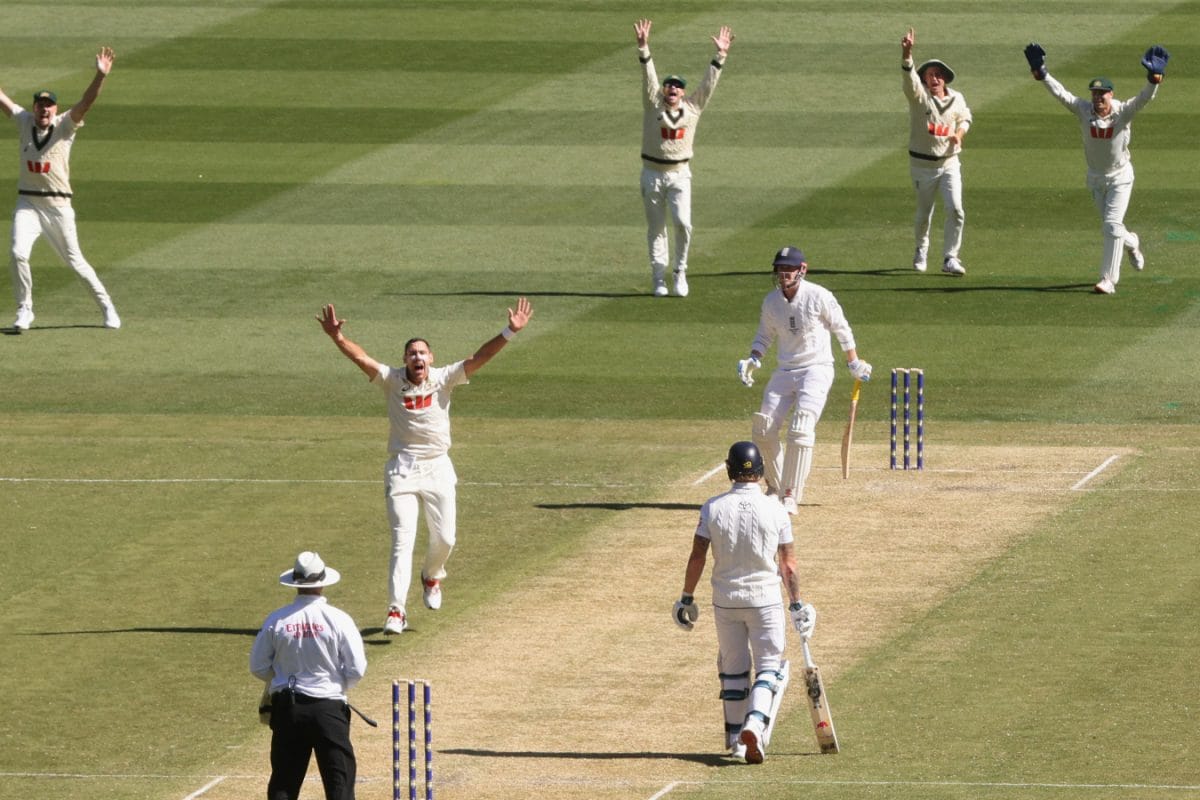
England stun Australia at the MCG as no batter reaches a half-century — a first since 1932
England recorded a memorable victory over Australia at the Melbourne Cricket Ground in the 2025–26 Ashes, in a match that will be remembered for its fierce bowling and unusually low individual scores. Remarkably, no batter from either side managed to reach a fifty — the first time an Ashes Test has produced that result since 1932.
Fast-paced, low-scoring drama at the MCG
The Melbourne surface and the conditions made run-scoring difficult throughout the Test. Persistent movement, variable bounce and disciplined bowling meant partnerships were hard to build. Instead of the big individual knocks often associated with the Ashes, this game turned into a battle of margins and collective discipline.
- Bowling dominated: England’s attack executed their plans consistently, taking regular wickets and stifling Australia’s scoring options.
- Australia fought hard: Their batters showed resilience in patches, but could not convert starts into half-centuries.
- Low individual scores, high stakes: Several batters reached the 30s and 40s, but none crossed the fifty mark, highlighting the gripping tension in each session.
Key factors behind the unusual scoreline
Several elements combined to produce the rare result:
- Bowling plans and execution: Bowlers from both sides stuck to tight lines, attacking the stumps and forcing batters into risky footwork and judgment calls.
- Pitch behaviour: The wicket offered enough assistance to keep batters uncomfortable, especially when the ball swung or bounced awkwardly.
- Mental pressure: In a high-profile Test like the Ashes, small mistakes are punished. Failures to convert starts were compounded by mounting pressure as the game progressed.
Historical perspective: why 1932 matters
The fact that no player posted a fifty in an Ashes Test is striking. The last time this happened was in 1932, a period remembered for intense bowling and a very different era of cricket. That long gap underlines how rare such a collective batting struggle is at the highest level.
Comparisons with the past highlight how cricket has evolved, yet also show that conditions and disciplined bowling can still produce classical, low-scoring Test encounters even in the modern era.
Impact on the series and what comes next
England’s win at the MCG shifts momentum in the series. Victories in hostile venues are always significant, and taking a Test at the MCG — especially under such testing batting conditions — can have psychological as well as points-based effects.
- Series balance: The result will force Australia to reassess their approach and batting technique ahead of the next Test.
- Selection questions: Both teams may consider changes, particularly among batters who struggled to convert starts.
- Tactical adjustments: Captains and coaches will study how bowlers were able to sustain pressure and will look for ways to counter that in future matches.
Takeaway
The MCG Test will be remembered for its intensity and the rare statistical footnote: an Ashes Test with no fiftys for the first time in nearly a century. It was a reminder that Test cricket remains unpredictable and that bowlers can still seize the moment, even on one of the game’s biggest stages. Fans will now wait eagerly to see how both sides respond in the remaining matches of the series.